The cost to install cabinets in 2026 will depend on many variables, including the type of cabinet, the size of your kitchen, and the complexity of the project. You can expect stock cabinets to be installed relatively quickly and efficiently, while custom cabinets with added details are pricier.
According to Homewyse, the price to install a cabinet varies between $486 and $736 per cabinet, depending on the number of cabinets needed in your kitchen, the state of the kitchen, and any other adjustments to be made.
Semi-custom and stock cabinetry can be estimated to be between $100 and $650 linear foot, with custom cabinetry usually being priced between $500 and $1,200 linear foot. In the case of a typical kitchen with a 10×10 room size, the total installation fee would be anywhere between $2,000 and $24,000.
Highland Cabinetry also explains that the installer would sometimes charge anywhere between $50 and $450 linear foot, depending on other essential variables.
Installation usually covers the leveling of cabinets, screwing them into wall studs, doing basic trim, and ensuring that all parts are aligned and laid out properly. However, it usually does not cover the removal of old cabinets, changes in plumbing or electrical issues, repairs to drywall, installation of flooring, painting, installing countertops, hooking up appliances, or obtaining permits.
Keep in mind that material prices and import issues can change cabinet costs from year to year. Even small shifts in tariffs or supply chains can make a noticeable difference in what you pay.
| Pricing unit | Low | Typical | High | Best for | Notes |
| Per cabinet | $486 | $610 | $736 | Stock | Basic install, minimal trim |
| Per linear foot | $100 | $350 | $650 | Stock/Semi | Varies by layout and region |
| Per linear foot | $500 | $850 | $1,200 | Custom | Precision fit, specialty hardware |
| Total 10×10 kitchen | $2,000 | $7,000 | $24,000 | All types | Size, layout, and complexity affect cost |
What Cabinet Installation Covers and What It Doesn’t
Cabinet installation generally includes everything needed to put your cabinets in place and make sure they work well. This means planning the layout, leveling and attaching cabinets to the wall studs, filling small gaps, lining up doors and drawers, and adding simple trim. Installers make sure your cabinets are straight, secure, and ready to use.
Most quotes are only for basic installation. Additional fees often occur for the removal of old cabinets, hauling away debris, moving plumbing or electrical lines, repairing drywall, painting, repairing floors, installing countertops or backsplashes, obtaining permits, and appliance installation.
Estimates can differ for several reasons. The size and layout of your kitchen, the kind of cabinets you choose (shaker, euro, nano), and whether your walls and floors are even all affect how long the job takes. Local labor rates and how easy it is to get materials also matter. Even small things, like adding crown molding or using tall cabinets, can increase the time and cost.
How Cabinet Type Affects Installation Costs
The type of cabinet you choose can greatly affect how much installation will cost. Stock, semi-custom, and custom cabinets each need different amounts of work, which changes both labor and overall project costs.
Stock cabinets, sometimes called ready-to-assemble or pre-assembled, are the easiest to install. They work easily in standard kitchens without any adjustment needed. This speeds up installation and keeps labor costs down. For example, a shaker-style stock cabinet can fit a typical kitchen with minimal modification. However, in older or unusual kitchens, you may need fillers to make the cabinets fit, which adds a bit to the cost. However, stock cabinets are ideal if you are looking to save money.
Semi-custom cabinets come in more sizes, so you can adjust the dimensions to fit your space better. This often means you need fewer fillers. They also tend to have more decorative panels, trim, or molding, which takes extra time to install. Planning is more detailed to make sure everything matches up, but the flexibility helps get a better fit for most mid-range remodels. Labor costs are usually in the middle, not as low as stock but not as high as custom cabinets. Euro-style semi-custom cabinets are a popular choice for this category because of their clean lines and versatile sizing.
Custom cabinets take the most work to install. Installers spend more time making sure everything fits perfectly, adding trim, and including features like pullouts, special hardware, or panels for appliances. They often need to make adjustments on site for things like scribing, paneling, or tall ceilings.
For example, many custom installations fall in the range of $500 to $1,200 per linear foot of cabinetry installed, with total project costs often reaching the higher end of expectations due to labor intensity and detailed work. Nano-style custom cabinets are sometimes used for highly specialized layouts or high-end kitchens where precise measurements and unique features are needed.
| Cabinet type | Typical lead time | Material/fit flexibility | Install labor complexity | Where it makes sense |
| Stock | 1–3 weeks | Low | Low | Builder-grade kitchens, budget projects |
| Semi-custom | 3–6 weeks | Medium | Medium | Mid-range remodels, some layout changes |
| Custom | 6–12 weeks | High | High | Premium homes, unique layouts, high-end features |
How Installers Price Cabinet Installation
Most cabinet installers use different approaches in calculating the cost for installing the cabinets. As the potential buyer, you must know the different methods so that you can carefully compare the different prices being offered to you.
Many contractors charge by the linear foot. They measure the length of your base and upper cabinets, then multiply by a set rate. This works well for simple layouts, but additional projects, such as trims, crown molding, or high units, are probably not included.
There may be installers who charge by the cabinet. This method is easy to understand, especially if you have standard cabinets. However, if you have a kitchen filled with small cabinets or fillers, you may end up paying more for labor even if you only have the same number of cabinets to install.
Hourly or daily rates are another option. These are most suited to complex tasks. This can be due to factors like uneven walls, old structures, or custom modifications. However, there is also a risk of increased expenditures because of unforeseen changes.
A full-scope bid is most common. The installer gives you one price for all the labor, sometimes including small adjustments or trim. This way, you know the total cost up front, but the installer needs detailed information about your project.
There are advantages and disadvantages to every pricing approach. Charging by the hour, by linear foot, or by cabinet is efficient, but could be missing some detail. Hourly rates can vary depending on the work done. Full-scope bids are a clear answer, but require planning.
| Model | Best for | Pros | Cons | Questions to ask |
| Per linear foot | Standard layouts | Easy to estimate | May not reflect trim or tall cabinets | Does the rate include fillers and basic trim? |
| Per cabinet | Stock cabinets | Simple to calculate | Misleading if many small cabinets | Are fillers, scribing, and minor adjustments included? |
| Hourly/day | Custom or complex jobs | Flexible for surprises | Costs can rise | How is time tracked and billed? |
| Full-scope bid | Remodels | Clear total upfront | Requires detailed plans | What exactly is included in the bid? |
Biggest Factors That Increase or Decrease Cabinet Installation Cost
Several factors contribute to the cost of installing cabinets. Knowing them all lets you plan your budget while anticipating where costs can surge.
The shape and complexity of your kitchen have a big impact on labor costs. L-shaped kitchens are usually easier to install than U-shaped ones. Galley kitchens can work well, but require careful measuring and adjustments due to their narrow spaces. If you add an island, the cost can increase as installers have to deal with more panels and sometimes extra electrical outlets. Tall pantry cabinets are heavier and need more careful leveling-a process requiring additional time and attention.
The condition of your home will also impact the kitchen cabinet installation cost. If your floors or walls aren’t level, installers have to make adjustments so the cabinets fit right. Uneven studs or a lack of supports to secure the cabinets will slow down the process. Older homes often have hidden issues, such as uneven framing or damage behind the wall, which add to the work.
Features like decorative panels, appliance garages, custom hood covers, pullouts, organizers, and built-in trash systems make the job more complex. Soft-close hinges, floating shelves, and different finishes also add to the work.
The more custom features you add, the higher the cost. Features such as crown molding, light rails, and toe kicks require additional measuring and fitting. Cabinets that run all the way to the ceiling take longer to install. Features like decorative panels, appliance garages, custom hood covers, pullouts, organizers, and integrated trash systems increase the job’s complexity. Additional works include soft-close hinges, floating shelves, and multiple finishes.
Logistics and accessibility can also be a consideration, particularly if the area is small or in a high-rise apartment building. Stairs, narrow doors, or waiting for an elevator can slow things down. A small area to deliver and unbox, to set up a work area, or to protect your floors or your cabinets all take extra time and effort.
You can keep expenses low by preparing well and communicating clearly. Choose an uncomplicated design, use as little detail as possible on the trim, and have your floors and walls prepared before installing the cabinets. All that your cabinet installer has to do is follow your instructions.
| Factor | Why it affects cost | Impact | How to control it |
| Kitchen layout | More corners, islands, or unusual shapes take more labor | Medium | Keep the layout simple when possible |
| Floors/walls out of level | Requires shimming and scribing | High | Check surfaces and plan adjustments |
| Crown molding/trim | Extra measuring and fitting | Medium | Limit high-labor trim |
| Tall cabinets | Heavier and harder to level | High | Stage delivery and use support |
| Decorative features | Pullouts, garages, and integrated trash | Medium | Decide features early |
| Access/logistics | Tight spaces or stairs slow installation | Medium | Clear pathways and coordinate delivery |
Additional Costs Homeowners Often Forget and How to Plan for Them
Cabinet installation usually comes with other related costs. Planning for these expenses ahead of time can help you avoid budget surprises during your remodel.
Removing old cabinets and disposal
In some cases, removing old cabinets can be even more of a challenge because of the extra labor and disposal costs involved. This depends on the size of the cabinets and how easily they can be removed. Sometimes, hidden problems like mold or water damage behind the cabinets can quickly increase costs.
Plumbing adjustments
The plumbing cost will depend on how much plumbing work is required. The cost of reconnecting a sink will be less. However, moving a sink, reconnecting a dishwasher waterline, or improving water shutoff valves will incur more expensive plumbing charges. Any modifications to plumbing code regulations can influence this cost as well.
Electrical updates
Electrical work may involve more than simply putting in cabinetry. Installing GFCIs, new circuitry, or under-cabinet lighting may add to these expenses. Relocation of outlets to support backsplashes or islands will also add to labor.
Drywall repair and paint
Drywall repairs are common after removing cabinets. Removing soffits or changing the cabinet layout often means you’ll be patching and repainting. Sometimes it takes additional time to match the wall’s texture.
Flooring and baseboard changes
Flooring prices can vary depending on whether the cabinets sit on top of the floor or if the floor goes around the cabinets. Floating floors could require adjusting the trim or baseboard. If the floors in your home are uneven, it could affect the alignment of your cabinets.
Countertop coordination
Countertops are installed separately from cabinets, but they still affect your schedule. The countertop template is made after the cabinets are in place, so you’ll have to work with different contractors. Delays between trades may result in increased labor or scheduling costs.
Appliance installation and modifications
The cost to install appliances depends on the type you choose. Panel-ready appliances, special spacing, and changes to ventilation or hoods can add to the labor. If there is little room for error, installers may need more time and careful planning.
| Line item | Low | Typical | High | When it applies | Ways to reduce cost |
| Cabinet removal | $200 | $500 | $1,000 | Full remodel | Inspect walls early |
| Plumbing | $150 | $400 | $900 | Sink or layout change | Keep fixtures in place |
| Electrical | $100 | $350 | $800 | New lighting or outlets | Plan wiring early |
| Drywall/paint | $150 | $400 | $900 | Layout or soffit change | Combine patchwork |
| Flooring | $300 | $800 | $1,500 | Floor replacement | Align cabinet layout |
| Countertops | $800 | $2,000 | $4,500 | New counters | Coordinate schedules |
| Appliances | $200 | $600 | $1,200 | Panel-ready units | Confirm specs early |
Notes:
- Figures are broad estimates for the U.S. in 2026 and will vary by region, labor rates, and project complexity.
- High-end materials or large kitchens can push costs toward the upper end of the range.
- Coordinating trades and planning early helps keep costs closer to the lower or typical range.
Real-Life Cabinet Installation Examples
Real projects often reveal details that pricing guides do not show. These examples reflect what homeowners commonly experience during cabinet installation.
Example 1: Small kitchen refresh
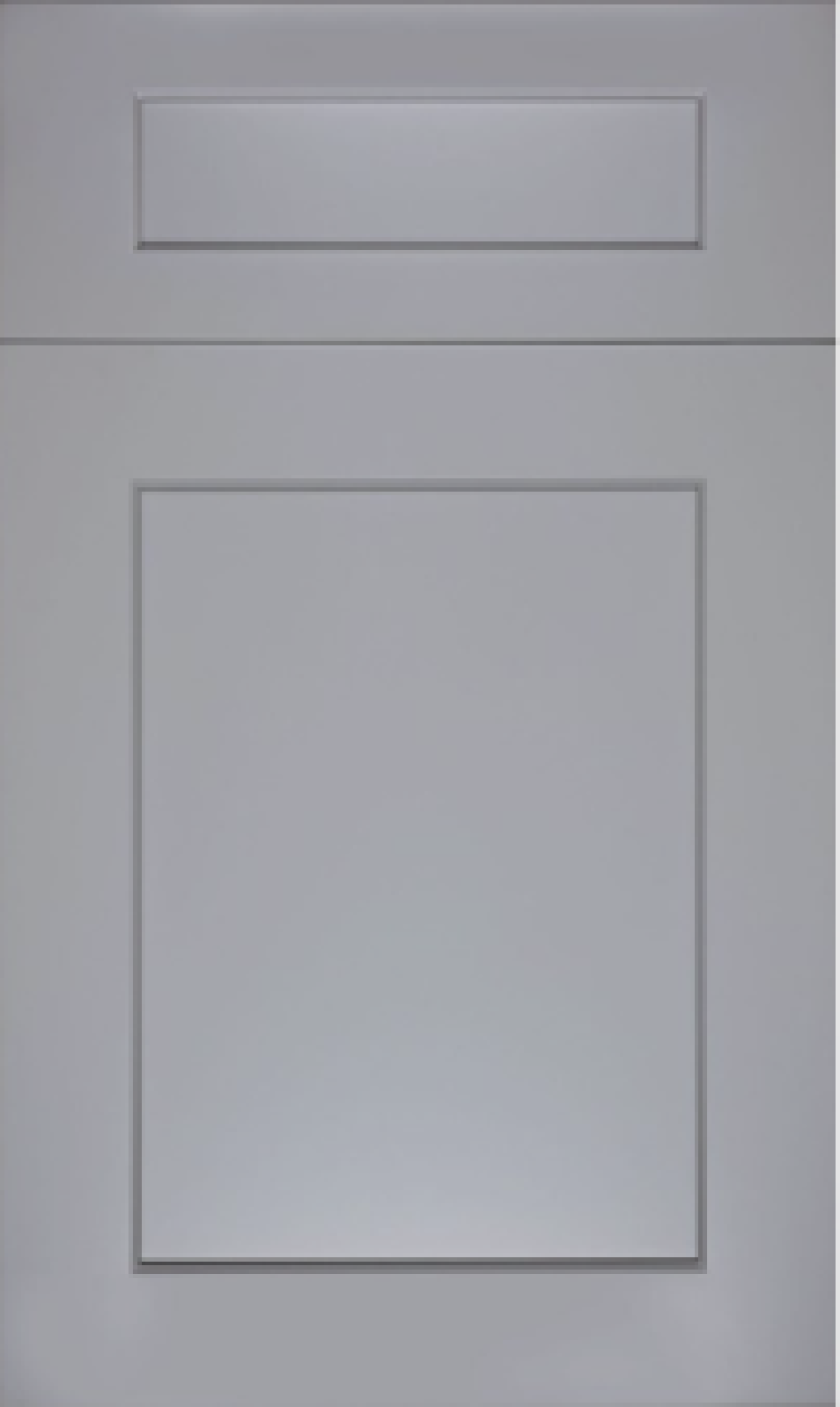
In this project, the homeowner replaced the old cabinets with stone grey shaker cabinets without altering the floorplan. Plumbing and electrical remained unchanged, which is good for cost control. While the technician was installing the cabinets, he discovered that one wall was not leveled. It needed only minor tweaking, but it did not hold up the project. The cost of installation remained within the lower per-cabinet cost range of $486 to $736 since changes were not possible. The homeowner did not experience any cost surprises since he inspected the walls beforehand.
Example 2: Mid-range kitchen remodel
This homeowner chose semi-custom cabinets to improve storage and add an island. There was a slight layout change, requiring new outlets and the installation of crown molding. The installation process required unique leveling considerations for the tall pantry cabinet due to the uneven floor. Installation costs landed in the middle of the $100 to $650 per linear foot range. The total cost to install cabinets fits within the typical $2,000 to $13,000 range for a 10×10 kitchen.
Example 3: High-end custom kitchen
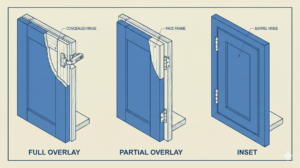
This was a full custom cabinet package with inset doors and ceiling-height uppers. The design included a custom hood surround, decorative side panels, and panel-ready appliances. Several cabinets during installation needed on-site scribing to match uneven walls, while appliance spacing also required fine adjustments. Such details increased the man-hours on site, driving the kitchen cabinet installation costs toward the higher end of the $500 to $1,200 per linear foot range. The homeowner planned extra time for coordination, which helped keep the project moving.
| Line item | Example 1 | Example 2 | Example 3 |
| Cabinets | Low | Medium | High |
| Installation labor | $486–$736 per cabinet | $100–$650 per LF | $500–$1,200 per LF |
| Demo and disposal | Low | Medium | Medium |
| Plumbing | Low | Medium | High |
| Electrical and lighting | Low | Medium | High |
| Drywall and paint | Low | Medium | High |
| Countertops | Medium | Medium | High |
| Appliance install | Low | Medium | High |
| Contingency | Low | Medium | High |
| Total install range | Lower U.S. range | Mid U.S. range | Upper U.S. range |
A Simple Estimator to Ballpark Cabinet Installation Costs
A rough estimate helps set expectations before meeting installers. This method uses common pricing patterns seen across U.S. projects.
Linear footage comes first. Wall and base cabinets should be measured together for a realistic total. Most kitchens fall between 20 and 35 linear feet.
Cabinet type comes next. Stock cabinets, like the ones available at Highland Cabinetry, sit at the lower end. Semi-custom cabinets land in the middle. Custom cabinets cost more due to fit and finish.
Project complexity should be decided early. A low level includes straight layouts and standard sizes. A medium level includes islands or pantry cabinets. A high level includes custom trim, ceiling-height cabinets, or detailed alignment.
The installation range should then be applied. Typical U.S. labor often falls within a per-linear-foot range. The range should rise with added complexity. A simple kitchen stays near the lower end. A detailed layout pushes toward the higher end.
Hidden costs should be added last. Demo, disposal, drywall touch-ups, and minor electrical work often appear mid-project. A contingency should cover those gaps. Remodel projects should include a 10-20% buffer. Older homes often reveal surprises once the cabinets come out. This method does not replace quotes, but it creates a realistic starting point.
How to Reduce Cabinet Installation Costs Without Sacrificing Results
It is possible to keep installation costs for the cabinets low by planning strategically. Small yet smart decisions taken during the early stages can save time and money in the end.
Try to keep plumbing, electrical, and HVAC lines in their existing position when possible. This way, you will not need different contractors or permits. Also, it is a good practice to leave walls in their existing position, as it adds extra framing and wall siding.
Standard cabinet sizes help control labor time. Installers can work faster if there are not as many fillers or specialized cuts. Keeping trim simple also helps, since crown molding and extra details take more time to install.
Plan your electrical work early on. When the time comes to decide where to place your outlets and lighting, you will avoid last-minute changes and delays. Recheck your measurements since accurate measurements mean less rework.
Cabinet staging makes installations easier. Placing the cabinets closer to the working area reduces handling time. Floor protection prevents damage and delays in repairs.
Hiring an Installer: Questions to Ask
First, ensure that the installer is licensed and insured. This provides security in the event of accidents or damage on your site.
Explain whether the quote is for labor only or includes fillers, trim, and hardware installation. Knowing this up front can avoid unexpected costs.
Ask them about how the installer will handle out-of-level floors and out-of-plumb walls. Usually, older homes require shimming and detailed adjustments.
Confirm who is responsible for scribing panels, installing the crown, and finishing toe kicks. That lack of clarity invites confusion on the project.
Discuss the project timeline and how change orders are priced. Knowing this upfront keeps the schedule and budget predictable.
Check whether the installer provides a workmanship warranty and what its duration is. Good installers stand behind their work.
Finally, ask who coordinates countertop templating and appliance installation. Proper coordination helps the project stay on schedule and prevents rework.
Answering these questions early ensures clear expectations, protects your budget, and minimizes surprises during the installation process.
2026-Specific Considerations
Labor costs can vary significantly depending on the region and season, i.e., whether it is peak season or not. Additionally, the costs of the materials can fluctuate in a matter of days, including everything from cabinets to hardware to finishes.
Delays in shipments or deliveries can influence labor and work coordination. To make sense of your costs, it would be great if you could obtain two or three estimates. It’s easier to understand what a fair price is and how each installer regards the task by comparing estimates. Ensure that all estimates have similar conditions and assumptions.
Keep in contact with your contractor in order to stay on schedule and keep your budget on track.
Conclusion and Next Steps
Several things affect the cost to install cabinets, including the type of cabinet, how complex the layout is, labor, and site conditions. To keep costs under control, builders, designers, and dealers can get help from experts. Getting advice on cabinet choices helps make sure you pick the right options for your project. Trade pricing tips let you compare labor and material costs from different installers. Help with project takeoff makes sure measurements, quantities, and staging plans are right, which cuts down on waste and delays. Planning for lead times helps keep your project on schedule by making sure deliveries, templates, and installers are ready when needed. Highland Cabinetry can help with all of these steps. They work with you to match the project scope, plan the schedule, and manage costs so your project goes smoothly.
Highland Cabinetry sells all-wood kitchen and bathroom cabinets in many styles, like shaker, euro, and nano with different colors and finishes. Many cabinets come ready to assemble or already assembled, which helps keep your project on schedule.Reach out to Highland Cabinetry to get product details, trade pricing advice, and help with planning your next kitchen or bathroom project.