If you’re feeling overwhelmed about remodeling your kitchen, you’re not alone. A kitchen remodel is one of the most complex home projects you can take on.
There are dozens of decisions to make, many of them interconnected, and it’s easy to feel like one wrong choice could derail your entire budget or timeline.
Most kitchen remodels don’t go over budget because homeowners lack concern. They go over budget because of poor planning, scope creep, and forgotten details – things that only become obvious once the walls are open and the pressure sets in.
That’s where a kitchen remodel checklist becomes invaluable. A well-structured checklist helps you:
- Control costs by making decisions in the right order
- Avoid delays caused by missed details
- Reduce stress by replacing guesswork with clarity
This article is your go-to step-by-step kitchen renovation checklist guide. You can bookmark it, print it, or return to it as you move through your remodel. You don’t have to do everything at once – but you do need to do things in the right sequence.
Phase 1: Define Your Goals Before Any Design or Quotes
Before you look at layouts, cabinets, finishes, or pricing, you need to get clear on why you’re remodeling in the first place. This step might feel obvious, but it’s one of the most commonly skipped – and one of the most important.
A kitchen remodel is full of decisions. If you don’t have SMART goals, those decisions quickly become reactive. You choose what looks good in the moment instead of what actually solves your problems. That’s how homeowners end up with beautiful kitchens that don’t function well.
Ask yourself why you’re considering remodeling:
- Are you doing it to improve how the kitchen works day to day?
- Is the space outdated and no longer reflects your style?
- Or are you preparing the home for resale and want to maximize value?
Next, examine what doesn’t work in your current kitchen. Maybe storage is tight, and cabinets don’t hold what you need. Maybe the layout forces people to walk through your cooking zone.
Or, maybe there’s never enough counter space when you’re preparing meals. These pain points should guide your priorities.
It’s also important to think about who uses the kitchen. Is it one primary cook or several people at once? Do kids do homework at the island? Do you entertain often? Your kitchen should support how you actually live.
Also, don’t forget to consider your timeline. Are you staying long-term or planning to sell in a few years? Short-term resale goals often call for safer design choices, while long-term living allows you to invest in comfort, storage, and durability.
Note: Remodeling without set goals often leads to regret. When you define success upfront, every decision that follows becomes easier – and far more satisfying.
Phase 2: Set a Realistic Budget (With Buffers)
This is the phase where many kitchen remodels quietly fall apart – not because homeowners don’t care, but because the budget was never fully thought through. A strong kitchen remodel budget isn’t just a number you hope to stay under. It’s a plan that guides every decision you make.
Before selecting materials or requesting quotes, you need to define what you can realistically spend – and how that money will be allocated.
Start with two foundational numbers:
- Total target budget – the maximum you can comfortably spend
- Contingency buffer – money set aside for surprises. For example, 10–15% for a cosmetic remodel, while 15–20% for a full renovation with layout or system changes
Unexpected issues happen in almost every remodel. A contingency buffer keeps them from turning into stress or rushed decisions.
Then, break your budget into defined categories:
- Cabinets
- Cabinet installation
- Appliances
- Trades (plumbing, electrical, flooring, drywall)
- Finishes (countertops, backsplash, hardware)
Without it, one category – whether cabinets or appliances – can quietly consume the budget and force compromises elsewhere.
Decide Where to Splurge vs. Save
Not every part of your kitchen deserves top-tier spending. Smart budgeting means choosing where your money has the biggest impact.
- Splurge on cabinets if storage, durability, and daily function matter to you
- Save on items like hardware or backsplash that can be upgraded later
- Prioritize functionality – layout, storage, and lighting – over aesthetics
Common Kitchen Remodel Budget Mistakes
Many budget issues come from small oversights – not big splurges:
- Spending too much early without knowing the full costs
- Forgetting labor, which often makes up 30–40% of the total budget
- Underestimating “small” costs like trim, fillers, delivery, disposal, or permits
A clear, realistic budget doesn’t limit your options – it protects your project and helps you make confident, informed decisions from start to finish.
Phase 3: Decide the Scope of Your Remodel
The scope of your kitchen remodel defines how big the project truly is – and it directly affects your timeline, cost, and stress level.
Not all kitchen remodels are the same. Most fall into one of three categories.
- Cosmetic Refresh: Cosmetic refresh projects focus on surface-level updates with minimal disruption. These often include new cabinets or cabinet refacing, new countertops, and little to no layout changes. This type of remodel is usually faster, more budget-friendly, and less stressful. It works well when the existing layout functions properly and major systems are in good condition.
- Partial Remodel: A partial remodel involves more changes but still avoids major structural work. It may include some layout adjustments, new cabinets and appliances, and limited plumbing or electrical updates. This option offers improved functionality without the full complexity of a major renovation, making it a common choice for homeowners who want meaningful upgrades without a full teardown.
- Full Gut Renovation: A full gut renovation is the most involved. It typically includes moving or removing walls, relocating plumbing and electrical, and new flooring, lighting, and ventilation. While transformative, it requires more planning, coordination, and flexibility throughout the process.
Kitchen Remodel Checklist: Scope Decisions
The following questions help you determine how extensive your remodel will be – and reveal hidden complexity early:
- Are any walls moving? Even removing a non-load-bearing wall increases demolition, framing, and inspection needs.
- Are plumbing locations changing? Moving sinks, dishwashers, or gas lines adds labor, coordination, and often permits.
- Are electrical upgrades required? Older homes may need panel upgrades, additional circuits, or code-compliant outlet spacing.
- Are permits needed? Structural, plumbing, and electrical changes usually require permits and inspections, which affect scheduling.
Answering these honestly prevents underestimating the scope and helps professionals give accurate timelines and pricing.
That said, here’s how scope may affect your remodel:
- Timeline: Bigger scope means more phases, inspections, and dependencies. What takes weeks can turn into months.
- Cost: Structural and mechanical work adds up quickly, especially when multiple trades are involved.
- Stress: More scope means more coordination, more decisions, and more opportunities for delays.
Be honest about what you take on. A larger remodel isn’t always better – sometimes a well-planned, smaller scope delivers the best results with far less disruption.
Phase 4: Measure & Document Your Existing Kitchen
This step is where your ideas start turning into something real. No matter how good a design looks on paper, it can only work if it’s based on accurate, real-world measurements. Take the time to measure and document your existing kitchen to prevent costly mistakes down the road.
Accurate measurements are crucial for cabinets, appliances, and layout planning. Even small errors – an inch here or there – can cause big problems once ordering and installation begin.
Make sure to carefully measure and record:
- Wall lengths
- Ceiling height
- Window and door placement, including trim and swing direction
Also, document what’s behind the walls, including:
- Electrical outlets and switches
- Plumbing lines
- Gas lines
- HVAC vents and returns
These elements often limit where cabinets, appliances, and lighting can go. Knowing their locations upfront allows for better planning and fewer surprises.
Moreover, take proper photos from multiple angles. Capture wide shots of the entire kitchen, then close-ups of corners, appliances, and problem areas. Photos help designers, cabinet professionals, and contractors see things that measurements alone can’t explain.
Note: Remember, incorrect measurements lead to cabinet delays, reorders, and added costs. Assumptions almost always fail during remodeling. Whereas, detailed documentation ensures everyone involved – designers, installers, and trades – works from the same accurate information, keeping your project on track and reducing stress.
Phase 5: Plan the Layout & Workflow
A kitchen should work effortlessly – not fight you every day. Beautiful finishes won’t matter if the layout is inefficient and frustrating. This phase focuses on how you move through the space, use appliances, and handle everyday tasks.
Good layout planning starts with function, not style. So, evaluate how work happens in your kitchen:
- Consider the kitchen work triangle (sink, stove, refrigerator) and keep these areas close – but not cramped
- Analyze traffic flow through the space, especially in walkways that pass through the kitchen
- Ensure adequate clearance around islands (for walking, seating, and appliance doors) and appliances (so doors and drawers open fully)
You should also consider storage as part of the workflow:
- Pantry space that’s easy to access while cooking
- Trash and recycling placed near prep and cleanup zones
- Small appliance storage to keep counters neat and functional
Storage that’s thoughtfully placed saves time and reduces clutter.
Common Layout Mistakes
Many layout issues don’t become obvious until the kitchen is in use, such as:
- Islands that block walkways or pinch traffic flow
- Appliance doors that collide when opened
- Poor landing space near the sink, range, or refrigerator
- Choosing symmetry or visual balance over real usability
A functional design helps support how you cook, clean, and socialize. When function is given priority, the kitchen becomes easier to use and remains well after the renovation is done.
Phase 6: Choose Cabinets (The Backbone of the Kitchen)
Cabinets are the backbone of your kitchen remodel. They take up the most visual space, define how the kitchen functions, and influence nearly every other decision that follows.
Of all the other elements in your kitchen, cabinets play the biggest part in determining how your kitchen looks, feels, and performs. Due to this, it’s essential to finalize your cabinets at the right time.
To begin with, you have to choose the type of cabinet that suits you. There are several options available:
- Stocked units come in standard dimensions and can be delivered faster and less expensively.
- Semi-custom cabinetry provides options for size, finish, and storage. They are also affordable.
- Custom cabinets will be designed exclusively for you, providing you with the utmost flexibility.
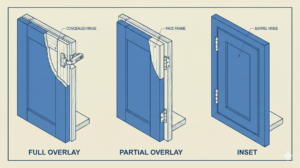
Then, there is the door style. This is the major determinant of the kitchen design. It could be modern, classic, or transitional.
Next, choose the finish:
- Painted cabinets are very trendy and very clean. However, they can wear quickly.
- Stained cabinets show the natural grain of the wood and tend to age well.
Homeowners can also evaluate the storage options, including:
- Pull-out trays and drawers
- Soft-close hinges & slides
- Pantry systems for easy access and organization
These features often deliver more value than decorative upgrades. You should also think through toe kick and crown molding decisions, which affect both comfort and visual balance.
Why Cabinets Must Be Chosen Early
Cabinets should be selected early in the planning process because they drive many critical decisions. For instance:
- They determine layout and appliance placement
- Their dimensions affect electrical, plumbing, and ventilation planning
- Lead times can range from weeks to months, impacting the entire schedule
- Countertops and lighting layouts depend on cabinet sizes and configuration
Cabinets anchor your remodel. When chosen at the start, they keep the project organized, functional, and on track all the way through.
Phase 7: Select Countertops, Backsplash & Surfaces
Countertops, backsplashes, and other surfaces do more than add visual appeal – they need to work together as a system. When homeowners pick these elements in isolation, the kitchen can feel disjointed or impractical.
Here’s what you should do:
Start with the countertop material. Consider durability, maintenance, and daily use. Quartz, granite, and solid surfaces all perform differently and affect the overall feel of the kitchen.
Next, choose an edge profile. While subtle, this detail influences both style and safety, especially in households with children.
For the backsplash, decide on:
- Material
- Height (standard, extended, or full-height)
- How it transitions around windows, outlets, and cabinets
Then select the sink type and size, keeping both function and cabinet compatibility in mind.
Timing Matters
Surface selections must follow a specific sequence:
- Cabinets must be installed prior to countertop templating
- Countertop fabrication timing affects when appliances can be installed
- Backsplash installation always comes after countertops
When these steps aren’t coordinated, delays and downtime are common. Thoughtful planning keeps the project moving smoothly and avoids unnecessary waiting between trades.
Phase 8: Plan Appliances & Fixtures Early
Many homeowners choose appliances and fixtures too late in the process, which leads to redesigns, delays, and unexpected costs. Planning them early gives the entire remodel a proper framework.
Ensure to confirm exact appliance sizes, including depth and clearance needs. Even small size differences can impact cabinet layouts. Plus, decide between panel-ready or standard appliances, as this affects cabinet design and cost.
Review ventilation requirements as well, especially for ranges and cooktops. Proper venting impacts cabinetry, ducting, and ceiling work.
If possible, opt for fixtures early, including:
- Sink type and size
- Faucet style and reach
- Pot filler placement, if desired
Why This Matters
Appliances directly affect cabinet dimensions and layout. Electrical and plumbing rough-ins must match appliance specifications. Late changes often mean reworking cabinetry or utilities – both expensive and time-consuming.
Timely appliance decisions prevent major headaches and keep your remodel on track.
Phase 9: Lighting & Electrical Planning
Lighting is often treated as an afterthought, but it plays a major role in how your kitchen functions and feels. Poor lighting can undermine even the best-designed space.
A well-lit kitchen includes multiple layers:
- Ambient lighting for overall illumination
- Task lighting for prep and cooking areas
- Accent lighting to highlight design features
- Under-cabinet lighting to eliminate shadows
- Strategic outlet placement for convenience and code compliance
Key Insight
Lighting should be planned in advance of cabinet installation, since cabinet height, layout, and spacing determine where lights and wiring can go.
Good lighting improves:
- Safety by reducing shadows
- Functionality during cooking and cleanup
- The overall feel and comfort of the space
Poor lighting is hard – and expensive – to fix later. Planning it upfront ensures your kitchen works day and night beautifully.
Phase 10: Hire the Right Professionals
Even the best kitchen plan can fall apart if the wrong professionals are involved. Hiring the right team isn’t only about price – it’s about experience, communication, and accountability. This phase protects everything you’ve planned so far.
Here are a few things you must consider when hiring the right experts:
- Get multiple quotes. This helps you understand realistic pricing and spot red flags. A quote that’s much lower than others often means something is missing.
- Always verify licenses and insurance. This protects you if something goes wrong and ensures the work meets local requirements.
Before hiring, homeowners should also clarify:
- What’s included in the scope of work
- Timeline expectations, including start and completion dates
- The change order process, so you know how adjustments are handled
Ask directly about cabinet installation experience. Cabinets are one of the most expensive and visible parts of the remodel, and poor installation can undo good design.
Phase 11: Permits, Ordering & Scheduling
This stage is where many remodels slow down or stall – not because of design issues, but because of logistics. Permits, product lead times, and trade coordination all play a major role in keeping the project moving.
Confirm which permits are required and who is responsible for pulling them. Permits often affect inspection timing and scheduling. Order long-lead items first, such as cabinets, appliances, and specialty materials. These items often dictate when work can begin.
Lock in delivery dates and confirm storage plans if materials arrive early. Then carefully coordinate trades, ensuring each phase happens in the correct order.
To help you stay on track, here are some ways to reduce downtime:
- Plan work sequences in advance
- Avoid scheduling trades before materials arrive
- Build buffer time into deliveries and inspections
Phase 12: Prepare Your Home for the Remodel
This step helps focus on daily life – not finishes or layouts. A kitchen remodel disrupts routines, and preparing your home ahead of time makes the process far more manageable.
Set up a temporary kitchen with essentials like a microwave, coffee maker, and mini fridge. This small step goes a long way in maintaining normalcy.
Protect floors, furniture, and adjacent spaces from dust and debris. Even contained remodels spread more than expected. Additionally, plan for noise and dust, especially if you work from home or have children or pets.
Finally, adjust daily routines. Cooking, meal prep, and cleanup will look different for a while – and that’s okay.
Phase 13: During the Remodel – What to Watch For
You don’t need to micromanage your remodel, but staying engaged helps catch issues right away – when they’re easier to fix.
Here’s what you need to do:
- Inspect cabinet installation as it happens. Cabinets should be installed according to the plan and manufacturer guidelines.
- Confirm cabinets are level, plumb, and aligned. Small alignment issues can affect doors, drawers, and countertops later.
- Check for damage immediately, including scratches, dents, or finish issues. Reporting them at the outset makes resolution easier.
- If changes come up, communicate immediately. Delayed decisions can stall progress or increase costs.
Staying attentive without hovering keeps the project moving smoothly and protects your investment.
Phase 14: Final Walkthrough & Post-Remodel Checklist
Before signing off or making final payments, slow down. The final walkthrough is your opportunity to ensure everything meets expectations.
Take time to verify:
- Cabinet doors are aligned properly
- Drawers open and close smoothly
- Hardware is installed correctly
- Touch-ups are completed
- Warranty and care documentation is provided
Test appliances, lighting, and outlets. Open every drawer and door. Look closely at finishes and transitions.
This phase is all about confirming quality. Once everything checks out, you can enjoy your new kitchen with confidence, knowing it was planned, executed, and finished the right way.
Common Kitchen Remodel Mistakes to Avoid
Most kitchen remodel problems don’t emerge from bad luck – they come from rushed or overlooked decisions. Make sure to avoid these pitfalls:
- Rushing decisions: Making quick choices often leads to regret, reorders, and higher costs. Taking time to review layouts, materials, and timelines helps avoid expensive mistakes.
- Ignoring lighting: A kitchen may look beautiful, but feel frustrating if task areas are poorly lit. Lighting should be planned cautiously, not added as an afterthought.
- Poor communication: Misunderstandings with contractors about scope, timelines, or changes can derail the project. Clear expectations and written agreements are essential.
- Skipping a contingency budget: Unexpected issues are common, especially in older homes. Without a financial buffer, stress increases, and compromises become unavoidable.
- Choosing style over function: A kitchen that looks great but doesn’t function well will cause daily frustration. Function-first planning leads to long-term satisfaction.
Printable Kitchen Remodel Checklist (Callout Section)
A printable kitchen renovation checklist is highly recommended – and for good reason. Remodeling involves dozens of decisions, and it’s easy to feel overwhelmed. A condensed checklist keeps everything clear and organized in one place.
When you have a checklist, it makes your project easy to reference at any stage. Whether you’re planning layouts, selecting materials, or reviewing final details, it helps you remain on track.
It also encourages bookmarking or saving, so you can quickly return to it when making decisions. This increases confidence and reduces second-guessing.
Most importantly, a kitchen remodeling checklist reduces overwhelm. Instead of juggling everything in your head, you can focus on one step at a time.
Think of it as your remodel roadmap – from initial planning to final walkthrough. A simple checklist can make a complex project feel manageable and far less stressful.
Final Thoughts: A Well-Planned Kitchen Remodel Is Always Worth It
A kitchen remodel is a major investment – but it doesn’t have to be a stressful one. With the right planning, it can be a smooth and rewarding experience.
When you take the time to plan each phase, stress naturally goes down. You know what to expect, costs stay under control, and decisions feel more confident and intentional.
Good choices tend to compound over time. A smart layout improves daily flow. Well-chosen cabinets enhance storage and longevity. Proper lighting makes the space safer and more enjoyable.
And since your kitchen is one of the most-used spaces in your home, these thoughtful decisions pay off every single day – not just on day one.
If the process ever feels overwhelming, get professional guidance – it can be a game-changer. Experts can help you avoid costly mistakes, especially when it comes to cabinets, layout, and overall planning.
A well-structured kitchen remodel checklist isn’t just a nice-to-have. It’s the core of a remodel you’ll be proud of for years to come.